Mississippi State: An Embroidery Design Review for Real Projects
When an embroidery design like Mississippi State lands in my library, my first question isn’t “is it pretty?”—it’s “how will it perform?” As a designer who stitches for clients and my own small shop, every file needs to earn its place. Let’s walk through this map design as if we’re preparing it for a real project, say, a custom tote bag for a boutique’s holiday gift collection.
The First Impression: More Than Just a Map
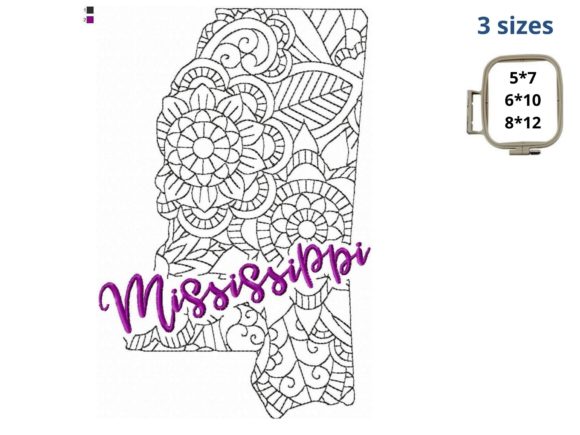
Mississippi State presents itself immediately as an artwork map. This isn’t a sterile, line-drawn outline; it carries a creative, almost illustrative personality. The mood is celebratory and proud, clearly tapping into that 4th of July Independence Day feeling. That’s a strong starting point for any project targeting gifts, patriotic themes, or local pride merchandise. The layout suggests it’s designed to be a focal point—not a tiny accent. The detail level appears balanced for embroidery: likely enough shape definition to be recognizable, without micro-details that might vanish into stitch density. It feels like a design destined for a mid-to-large hoop, where its personality can fully emerge on the fabric.
Where This Design Finds Its Natural Home
Thinking practically, I envision Mississippi State excelling on several fronts. For custom apparel, a well-stitched version on the back of a denim jacket or the front of a cotton sweatshirt would be striking. It has the substance to stand alone as a statement piece. As a personalized gift, imagine it on a canvas tote bag—the kind you might fill with local goodies for a wedding welcome gift or a new homeowner. The artwork style elevates it from a simple graphic to a keepsake.
For small shop merchandise, this is a contender for Etsy sellers or craft fair vendors focusing on state pride, travel, or Americana themes. Stitched onto a high-quality tea towel or a linen pillow cover, it becomes a boutique home decor item. The “gifts, and more” suggestion in the description is apt; its appeal is broad. I’d also consider it for embroidered patches, provided the hoop size and stitch density allow for clean edges on a potentially smaller scale. The recognition factor of the Mississippi shape adds immediate value for customers seeking something specific and meaningful.
Scenarios for Success
- Sweatshirt Embroidery: A heavyweight cotton sweatshirt provides a stable, textured canvas that would complement the design’s artwork feel.
- Tote Bag Design: A sturdy canvas tote offers a flat, forgiving surface. This project screams “marketable” for a small craft business.
- Holiday Embroidery: Aligning with 4th of July celebrations makes it perfect for seasonal caps, aprons, or picnic blanket accents.
- Baby Embroidery: On the back of a baby’s organic cotton hoodie (as a gift for grandparents), it becomes a sweet, personalized heirloom.
The Practical Stitching Considerations
Now, the crucial part: how does it translate from digital file to threaded needle? Without knowing exact stitch counts or file formats from the description, we must proceed with professional caution. The artwork nature implies areas of fill stitch and likely satin stitch for borders or text. This means stitch density needs attention.
On textured fabrics like some sweaters or on stretchy fabric like certain t-shirts, a dense design can cause puckering or stiffness. A robust stabilizer choice is non-negotiable. For dark fabric, thread color contrast is paramount—test a section first to ensure the intended celebratory mood isn’t lost in low contrast. The design’s shape might have detailed corners or curves; stitching it on a curved surface like caps requires expert hooping and potentially adjusting orientation.
Always, test the design on scrap fabric first. Use the same material and weight as your final project. This tells you everything about thread tension, whether small details like any lettering remain clear, and how the overall balance feels. I also advise checking it in black and white mockups to see the form separate from color, and comparing light and dark fabric backgrounds digitally before committing thread.
Where to Use With Extra Care
Some applications demand a second thought. If you’re considering very small hoop sizes, the artwork’s intricacies might become muddled. On thin fabric like a lightweight tee, the stitch density could overwhelm the material, leading to warping. Products that need frequent washing, like kitchen towels or baby items, require a stitch structure that can endure wear—review the design’s potential fragility in dense areas. For layered garments like hoodies with a fleece backing, stabilization becomes even more critical to prevent sinking stitches.
This isn’t to discourage use; it’s to ensure the finished product maintains its visual appeal and professionalism, which builds customer trust. A puckered, stiff embroidery on a soft t-shirt disappoints everyone. A crisp, clean stitch on a suitable product enhances product value and giftability immensely.
The Impact on Your Craft Business
From a commercial perspective, Mississippi State as an embroidery file is a versatile design asset. For Etsy sellers or small shop product lines, it offers a clear theme (state pride, North America, patriotism) that attracts a targeted audience. Its artwork style contributes to a handmade presentation that feels special, not generic. This aids in brand consistency if your shop focuses on illustrative, celebratory designs.
Using it in commercial embroidery projects for clients, say on a team’s uniform cap for a Mississippi-based business, adds recognition and local connection. For digital product sellers, offering it as part of a regional-themed bundle could be a smart move. Always, and I stress this, confirm licensing before selling finished items or digital products. The description provided doesn’t specify terms, so that due diligence is your responsibility.
Final Designer Notes
- Hoop size is key. Match the design’s scale to an appropriately sized hoop for clarity.
- Thread colors choice can tweak the mood. Consider a classic red/blue/white scheme for July 4th, or a more subdued palette for everyday decor.
- For embroidered patch applications, evaluate whether the design’s edges are suitable for a clean cut-and-finish.
- Create printable mockups of your intended final products (tote bag, sweatshirt, etc.) to gauge customer engagement before you stitch a batch.
In essence, Mississippi State is a design with strong emotional and visual appeal that, with thoughtful execution on the right substrates, can yield excellent embroidery projects. Its success hinges not on the digital preview, but on your practical steps: testing, stabilizing, and matching it to a product that lets its personality shine through the stitches. That’s where the real design review always happens—in the hoop, on the fabric, ready for a customer’s smile.