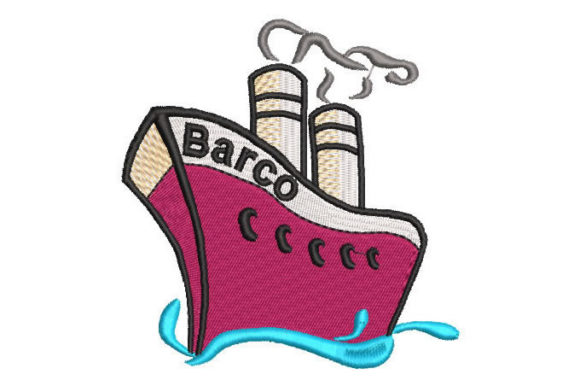
A Designer's Review: The "Boat" Embroidery Design for Real Projects
When you’re looking at a new embroidery design for your work—whether it’s for a client, your small shop, or a personal gift—the first glance tells you a lot. You’re not just seeing shapes; you’re imagining the final stitch, the fabric it will land on, and the person who will receive it. That’s the lens I use when evaluating a design like “Boat.” This isn’t a generic product description; it’s a practical judgment from the perspective of someone who needs designs to perform reliably and look beautiful in finished products.
The Immediate Mood & Visual Personality
The “Boat” design has a cool, unique character. It leans into nautical vibes without being overly cliché or childish. The shape and layout feel balanced, offering a clean visual that isn’t overly detailed. This is a significant point. A design with too much intricate detail can become muddy when stitched, especially on textured fabrics or smaller hoop sizes. This “Boat” has a personality that’s friendly and classic—it evokes calm water, summer, and a touch of adventure. That mood is versatile. It doesn’t scream “theme park souvenir”; it whispers “handmade quality.”
That makes it naturally belong to a range of projects. Think of a custom embroidered tote bag for a beach-loving friend, a crisp apron for a kitchen with coastal decor, or a subtle accent on a linen pillow cover. It feels appropriate for gift items and boutique merchandise because it’s recognizable yet refined.
Where "Boat" Excels in Real-Life Embroidery
Let’s walk through a real scenario. Imagine you’re preparing a batch of personalized holiday gifts: embroidered sweatshirts for a family who loves sailing. You choose this “Boat” design. On a mid-weight sweatshirt, with proper stabilizer, this design should perform well. Its likely composition—using satin stitches for outlines and fill stitches for the hull—will create a solid, clean look. The stitch density appears manageable, meaning it won’t be overly stiff or bulky on a comfortable garment.
For small business merchandise, this is a strong contender. An Etsy seller creating beach-themed baby items—like a delicate boat on a baby romper or a nursery blanket—could use this design to add value. It’s charming without being overwhelming. For apparel decorators, it works as a single focal point on a t-shirt or as a repeated motif on a cap’s curved surface, provided the hoop size is appropriate. As a digital product seller offering the file itself, this design is a straightforward asset for other makers; its clear shape looks good in printable mockups and digital previews.
On home decor items like tea towels or pillow covers, it offers that handmade presentation that elevates a simple product. For a craft fair product or small shop merchandise, it communicates a sense of professionalism and care. The visual appeal is directly tied to stitching clarity. If the file stitches out cleanly, with good thread color contrast, the finished product feels trustworthy and engaging to a buyer.
Considerations & Where to Use Carefully
Every design has its ideal applications and its trickier ones. With “Boat,” the key considerations revolve around scale and fabric. On very small hoop sizes, any smaller details within the design (like potential tiny lines for rigging) need to be inspected in a test stitch. Dense stitch areas, if present, could be challenging on thin or stretchy fabrics like lightweight t-shirts without robust stabilizer.
Dark fabric backgrounds require thoughtful thread color selection to maintain clarity. If you’re planning it for layered garments like caps, the curvature can affect the perception of the shape—a test on scrap fabric is essential. For products destined for frequent washing, like kitchen towels or baby clothes, you need to ensure the stitch structure is secure and not prone to snagging. The design’s giftability and brand consistency for your business hinge on this practical durability.
Practical Notes for the Working Designer
Before you commit this “Boat” to a client project or a batch of tote bags, here’s my standard checklist. Always, always test the design on scrap fabric of the same type you’ll use in the final product. This reveals everything: the true stitch density, how small details render, and whether the chosen hoop size works.
Review thread color contrast against both light and dark backgrounds. Sometimes a design looks perfect in a white mockup but loses definition on navy fabric. Inspect the design file in your software; look for any exceptionally tiny corners or decorative accents that might need slight adjustment for your machine.
- Use proper stabilizer for the fabric texture. A tote bag’s canvas needs a different approach than a baby blanket’s soft knit.
- Consider creating black and white stitch-out previews to analyze the structure without color distraction.
- Crucially, confirm the licensing terms of the design before selling any finished items or commercial embroidery projects. The product description mentions it comes with multiple embroidery file formats, which is excellent for machine compatibility, but the specifics of personal versus commercial use are not detailed here—you must check that.
- Similarly, exact stitch count, file formats, and minimum hoop size are not provided in the description, so verifying those details with the seller or file information is a necessary step.
The Final Takeaway for Your Projects
The “Boat” embroidery design presents a lovely opportunity. Its nautical vibe is beautiful and broadly appealing. For handmade product creators, it adds a layer of visual value that can enhance customer trust and engagement. It feels like a design that, when stitched well on the right product, tells a simple, positive story. It fits beach-themed categories naturally but also transcends them as a general symbol of relaxation and craft.
Your job as the designer or maker is to partner with the digital file’s potential by applying your practical knowledge: testing, adapting, and placing it on products where its clarity and mood can shine. Whether it becomes an embroidered patch on a backpack, a gift on a holiday apron, or a centerpiece on your boutique’s best-selling sweatshirt, its success will come from that thoughtful, realistic approach to the embroidery project.