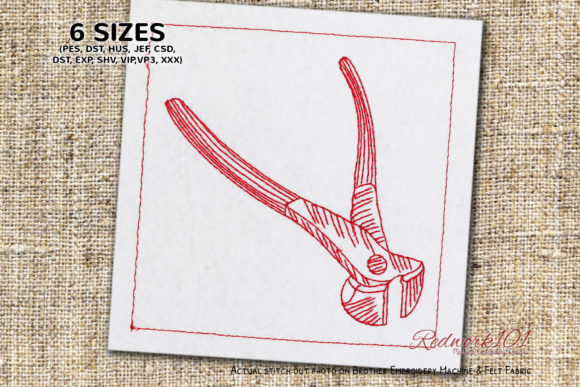
Mechanical Tool Lineart for Business Branding & Patches
As an embroidery designer working with small businesses every day, I approach new designs with a practical eye: how will this file perform as a brand asset? When reviewing the Mechanical Tool Lineart embroidery design for commercial use, my first impression is of a strong, classic and handmade aesthetic. The ‘redwork’ reference suggests a timeless, single-color approach, while the mechanical theme conveys robustness and skill. This isn’t merely decorative; it’s a statement of craft and precision, which can powerfully align with a brand’s values.
The Visual Personality for Brand Identity
Mechanical Tool Lineart projects a feeling of authenticity and professionalism. For a small business—think a boutique workshop, a creative studio, a specialty café, or a maker selling handmade goods—this design can serve as a visual shorthand for quality and attention to detail. The lineart style keeps it clean and legible, avoiding a cluttered or overly industrial feel. It leans rustic yet modern, making it versatile for brands that want to appear both expert and approachable. The optional box stitch mentioned adds a potential framing element, which can enhance a sense of completeness and finished craft on merchandise.
Real-World Applications for Small Business Merch
This embroidery file has significant potential across various branded items. Its clear linework makes it an excellent candidate for embroidered patches. A small boutique could use these patches as product labels on handmade items, or as authenticity seals on packaging. For staff uniforms, Mechanical Tool Lineart would work well as a chest logo accent on aprons, especially in a workshop or bakery setting, or as a subtle sleeve detail on work shirts.
Consider these specific applications:
- Cap Embroidery: A simplified version (or the core design) on the front of a cap can create a cohesive look for teams or as customer merchandise.
- Tote Bag Design: Embroidered on the front of a canvas tote, it transforms a simple bag into premium, branded merchandise for a florist, pet brand, or local shop.
- Apron Embroidery: Perfect for adding a branded mark to aprons in cafes, studios, or retail environments, reinforcing brand identity during customer interactions.
- Product Packaging Accents: Small patches or directly embroidered tags can elevate product packaging, suggesting a handmade, cared-for item.
- Event Merch & Customer Gifts: Used on commemorative hats or bags for events, it builds recognition and serves as a lasting brand reminder.
Where to Use This Design Carefully
While versatile, practical considerations are crucial for a successful finished product. The lineart nature means outlines are key. On very small patch sizes, fine details might become lost or produce high stitch density, which can affect fabric integrity. Test it at your intended size first.
Embroidering on curved surfaces like cap fronts requires checking that the design’s proportions remain balanced. If the description mentions an optional outer box, be mindful that this added element will increase the overall size and stitch count. On items subject to frequent washing, such as work uniforms, ensure the thread color (even if classic red) has good contrast against the fabric and that proper stabilizer is used to maintain design integrity over time. For dark uniforms, a bold, contrasting thread is essential for visibility.
Practical Designer Notes for Business Use
Before running this machine embroidery design for a client, follow these steps to ensure quality:
- Test the embroidery file in a single color (like black or white) on your intended fabric first. This checks clarity without color bias.
- Review it at the smallest size you plan to use, especially for cap embroidery or tiny product labels.
- Check thread color contrast against your sample fabrics—will it pop or blend in?
- Inspect spacing between lines; tight spacing on textured fabric might need adjustment.
- Confirm the required hoop size with your file provider to ensure your machine can handle it.
- Always test on a real scrap of your target fabric (canvas for tote bags, twill for caps, etc.) using proper stabilizer.
- Create a printable mockup for client approval, showing how it integrates with other design assets.
- Compare it alongside your brand’s other visual elements to maintain visual consistency.
- Crucially: Confirm commercial licensing for the digital embroidery file before any business production.
Impact on Brand Value and Customer Perception
Using Mechanical Tool Lineart thoughtfully on your merchandise directly affects your brand’s perceived value. A well-executed embroidered patch on a tote bag signals premium quality, increasing the item’s worth as a customer gift. On staff aprons or uniforms, it fosters professionalism and customer trust, presenting a unified and skilled team. For Etsy sellers or craft businesses, it acts as a recognizable brand mark across different products, building recognition and buyer engagement.
This design, by emphasizing craft through its theme and execution, reinforces a handmade presentation. It tells a story of expertise, which resonates with customers seeking authenticity. When integrated consistently across custom apparel, patches, and packaging, it strengthens your overall brand identity, making your small business more memorable and distinct in a crowded market.
In summary, Mechanical Tool Lineart is a robust embroidery design with strong applications for small business merch. Its classic, craft-oriented aesthetic can elevate branded items from simple decoration to meaningful brand assets. Success hinges on practical testing, mindful application, and ensuring proper licensing for your commercial embroidery projects. For businesses in the Work category or any maker-focused brand, this design offers a tangible way to stitch your story into your products.